

Gumji Kang
in conversation with Rick Jordan
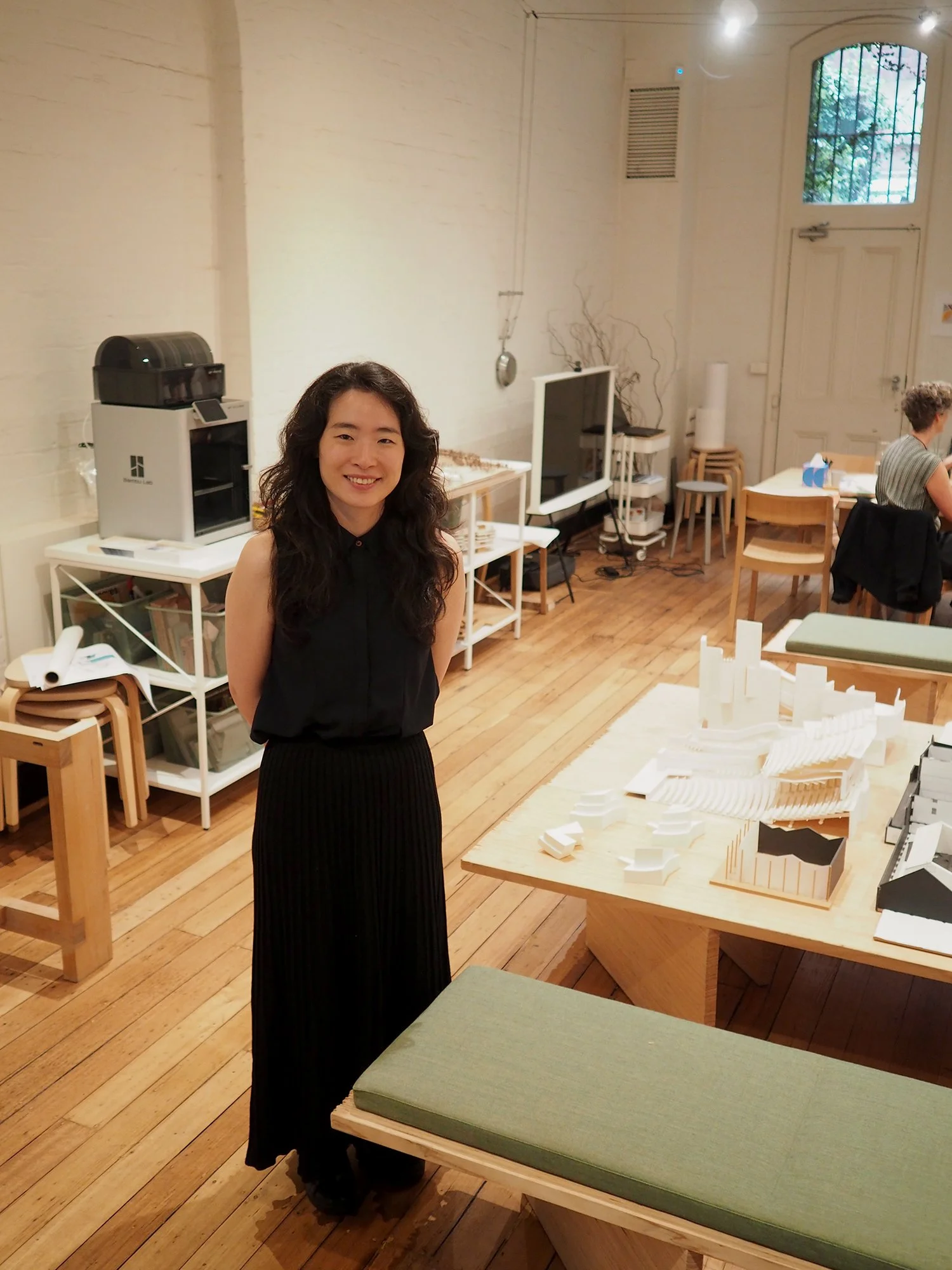
“I’ve always wanted to make sure empathy remains part of my voice and the way I work”
Rick Jordan (RJ)
Good morning, Gumji. We worked together briefly some years ago, and I feel like every time I’ve noticed what you’re up to, you’ve made another huge leap in your career. Congratulations on recently being appointed Managing Director of Snøhetta Australasia.
Gumji Kang (GK)
[feigns a little bow]
RJ
Can we step back a bit? How did you come to architecture, and did you have any competing interests before that path solidified for you?
GK
From a very early age, I knew I wanted to make things. I was always interested in putting things together—like many budding architects, I loved Lego, making models, those little folding papercraft models.
My parents and family could see that I liked building things, but we didn’t really know what that might look like as a professional career. We don’t come from a long line of architects—my parents still don’t quite know what I do. Architecture was a bit of a mysterious profession in my family. I actually come from a long line of teachers. My great-grandparents, grandparents, many relatives, and my mother were all teachers.
So for a long time I thought I would become a teacher too. I loved explaining things and sharing what I learned at school. I thought that might be my path. A couple of years before I was applying for university, I sat down with my grandmother and she said, “You like putting things together and making things. You should consider a pathway like that.” I didn’t really know what that might mean.
When I was about 16 or 17, I did a one-week work placement at Architectus. This was when their office was in Richmond. I don’t think I’ve ever told this story to anyone before. It was wonderful. I saw architects working on these amazing projects and building models. I thought, “That’s an amazing profession—I want to get into that.”
So I applied to the architecture course at the University of Melbourne. At the same time, I also applied for engineering, because that also involves making things and putting things together. That was the competing interest. I actually got into aerospace engineering first. But after the first semester, I realised I didn’t like engineering.
RJ
What tipped it for you? What didn’t you like as much as you expected?
GK
I realised I’m not actually that good at maths.
RJ
Only good enough to get into aerospace engineering!
GK
Maybe not at that level! But when you arrive at university you’re suddenly exposed to so many different ways of learning.
At the time, the University of Melbourne had a really diverse degree called the Bachelor of Environments, which isn’t offered anymore. You could study a wide range of subjects and essentially pursue knowledge across disciplines. So I decided to do that and figure out what I wanted later. Fast forward from there—I went on to complete my Master of Architecture and became an architect. I’ve remained connected to the university through lecturing - I couldn’t detach myself from my lineage of teachers it seems.
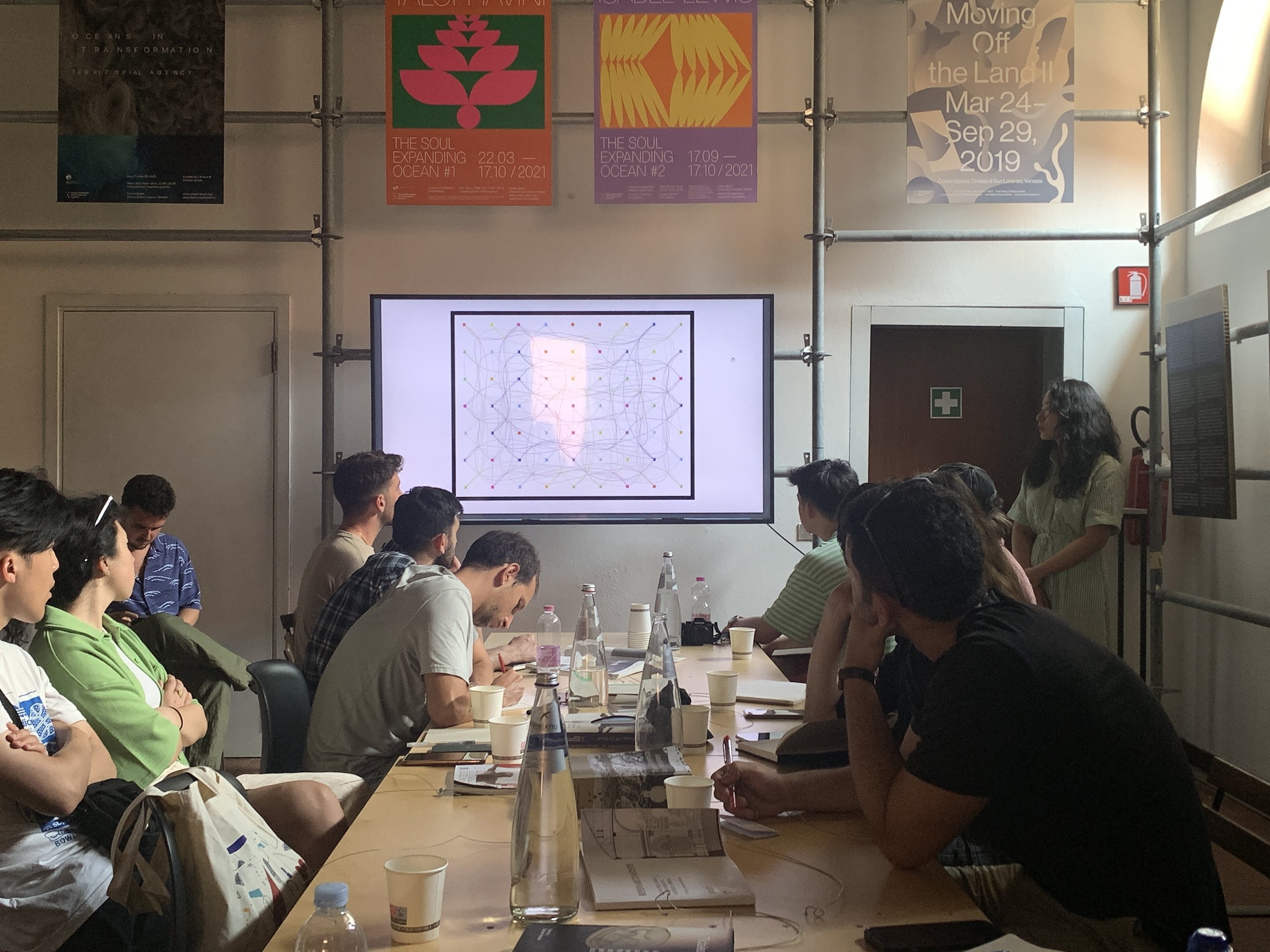
Lecturing at summer school Venice Studio
RJ
Probably feels inevitable looking back. Jumping forward a bit: thinking about your career, what personal attributes have helped you along? And conversely, are there qualities you’ve had to cultivate more consciously?
GK
Looking back, there are probably two traits that have helped me a lot.
The first is curiosity. I’ve always been curious and always wanted to learn things. I was constantly trying to learn languages, travel, read widely, and ask questions—so many questions that my mother used to get quite tired of it. My father really indulged that curiosity. He would answer my questions or help me find answers. That curiosity has helped enormously in architecture because you have to ask many questions.
The second trait is patience. I’m a relatively patient person. I can watch time pass while continuing to chip away at things—not sitting idly, but steadily working and knowing that eventually something will change. Those two traits—curiosity and patience—have really helped shape my career.
One thing I had to work harder at was observation. Hamish Lyon really taught me this: the difference between simply seeing something and truly observing it.
RJ
Being able to articulate must be key?
GK
Yes, it’s building an understanding of what you’re seeing. That really clicked for me during one of his master’s studios.
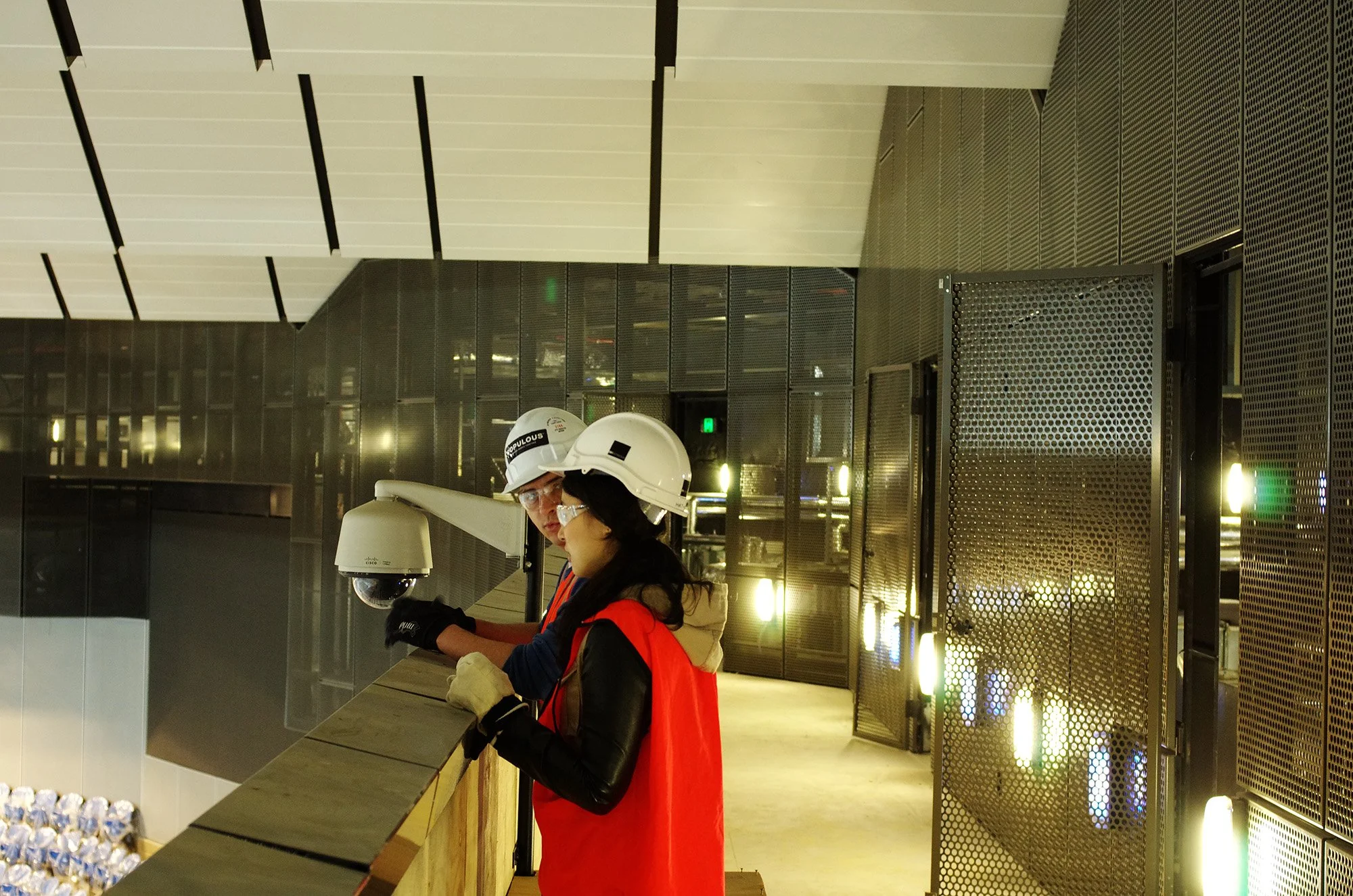
On site at Margaret Court Arena
RJ
Thinking about where you are now in leadership, are there qualities you feel are undervalued in leadership?
GK
One that comes up a lot is empathy. I do think the industry is shifting and getting better, but empathy is still sometimes seen as risky.
There’s an idea that leaders should be assertive and impose their position, rather than “muddy the waters” by understanding where someone else is coming from. Empathy can be interpreted as weakness rather than strength. I’ve always wanted to make sure it remains part of my voice and the way I work, even though that can present challenges.
RJ
Focusing more directly on International Women’s Day: have you seen movement toward equality for women during your career? And working in a global firm, how does Australia compare internationally?
GK
That’s a difficult question. About ten years ago there was a strong movement to bring more female leaders to the forefront. Then around five years ago there was more discussion about overcoming the challenges faced by the previous generation. By the time I began stepping into leadership roles and being invited to speak at panels and events, I had already seen an incredible generation of women just ahead of me pushing strongly for change.
That was wonderful, because it meant I didn’t just have one role model. There were many.
RJ
Compared to our mothers’ generation, the difference is huge. My mother was encouraged toward only a few “acceptable” careers for women. Later in life I have more clearly recognised skills in myself that clearly came from her, and I think about the satisfaction she might have found in a different career. The change across just one generation has been very visible.
GK
In Australia I definitely see younger generations pushing through, which has been wonderful. But there are still barriers. It still happens that I walk into a boardroom or management meeting and I’m the only woman at the table. Advocating for more female representation in those spaces is still a difficult conversation to have. So those barriers definitely still exist.
RJ
Working for an international firm, where do you feel Australia sits in regard to equality?
GK
In Scandinavia and parts of central Europe, I think there’s more of a top-down approach. Governments provide stronger frameworks and systemic support—things like parental leave policies and structural changes.
In Australia, there’s more of a bottom-up movement. That’s honestly a great energy to have! Theres push coming from younger generations who are willing to speak up.
A great thing about Australia is the strong cultural sense of giving people a fair go. When someone does speak up, there is often an opportunity to be heard.
But it does require people to speak up.
Personally, I believe we should create spaces where people don’t have to push quite so hard to be heard. Not everyone is naturally confident or a strong public speaker, and if that becomes the requirement for being heard, we lose a lot of important voices.
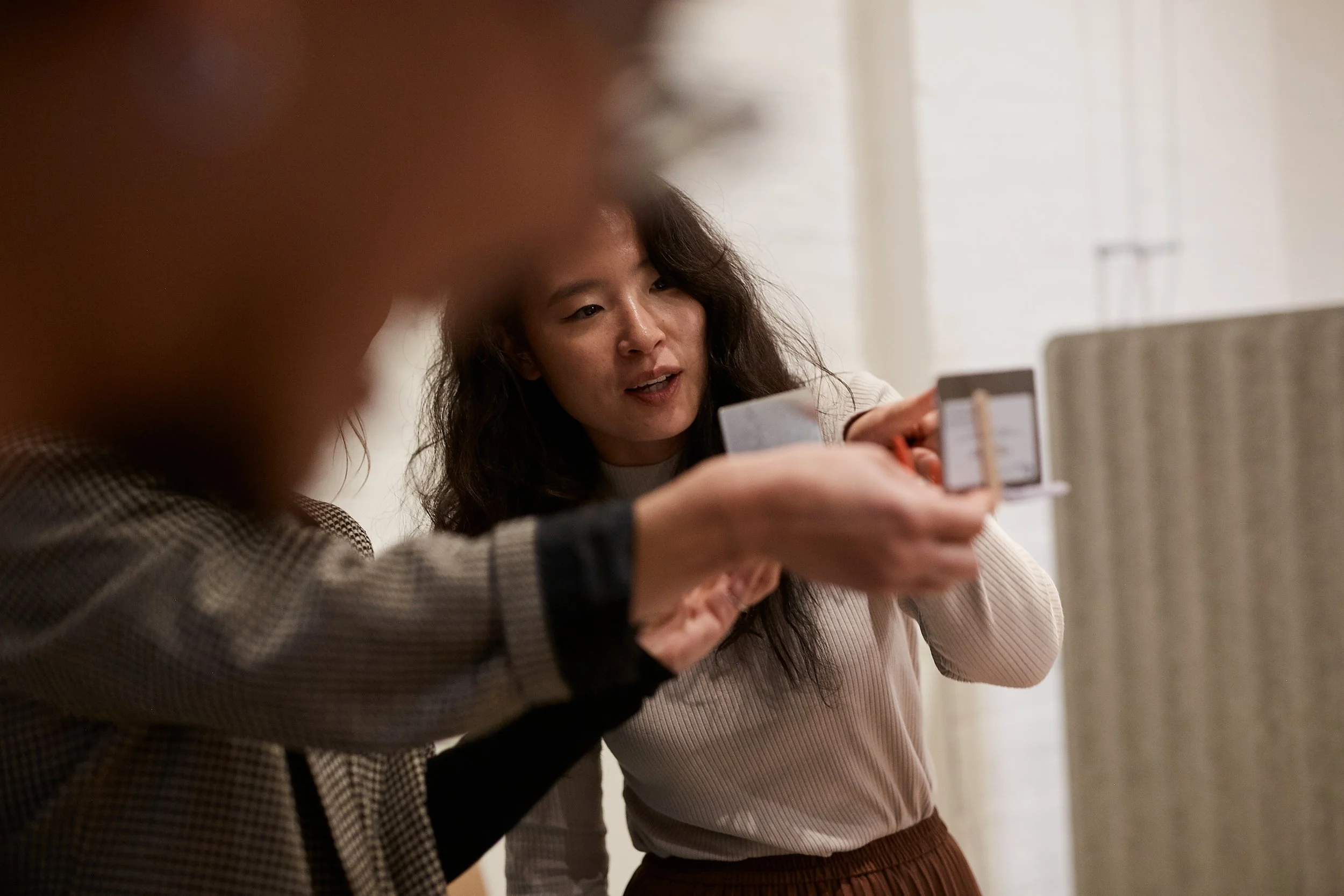
Snøhetta studio workshop
RJ
Looking back on your path, what advice would you give your younger self?
GK
I would tell myself to put myself out there more.
There were quite a few occasions earlier in my career where I stepped back and thought, “Maybe next time.” But often that next time never came. At some point I realised that no one is going to come up and offer you opportunities unless you speak up and show interest, almost continually.
In university studios and early professional life there’s often a mentoring structure that feels a bit parental - it doesn’t require you to be so proactive. Patience has been a positive trait in my career, but eventually you realise that patience alone isn’t enough. At some point you have to stand up and say, “Here’s my work.”
And when you start doing that, people often say yes. That was the surprising part.
RJ
That’s great advice. It’s never too late to find your voice. Thank you so much for your time.
GK
It was great to catch up.
Gumji Kang is the Managing Director and an Architect at Snøhetta Australasia, leading the Melbourne studio with a focus on strategic clarity, design excellence, and long‑term client partnership. She has served as a Chapter Councillor with the Victorian Chapter of the Australian Institute of Architects and currently lectures in Architectural Design at the Melbourne School of Design.
Rick Jordan is an Associate and Graphic Designer at Wardle. With a keen interest in the intersection of art and design with the built environment he undertakes a broad range of marketing activities, exhibitions, projects and business development initiatives within the studio. He’s also a keen driver of cultural initiatives - like Flagbearers.