

Justine Clark
in conversation with Justine Makin
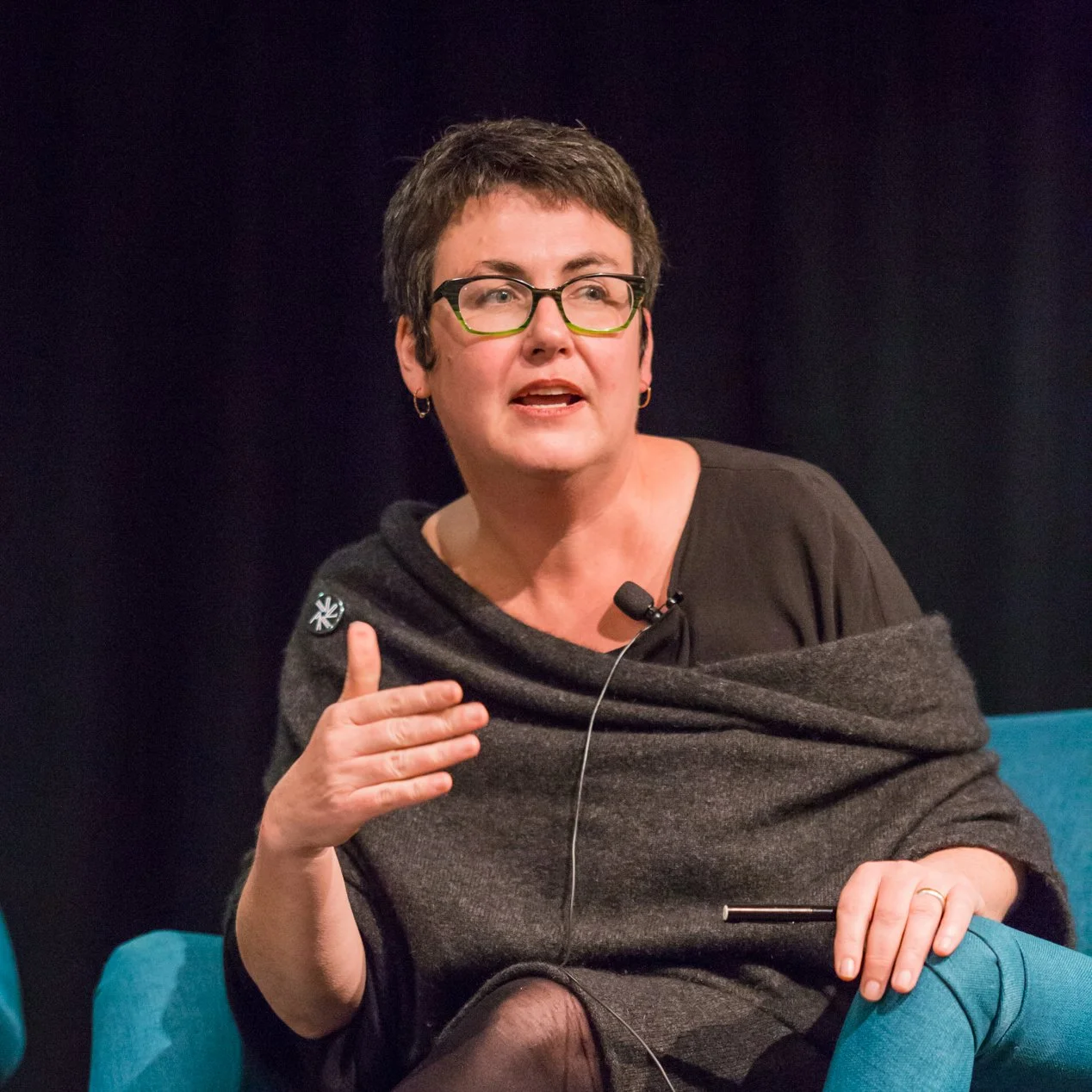
We take the quality of the content seriously and we think very carefully about the kinds of things we publish.
Justine Makin (JM)
Firstly, congratulations on your recent acknowledgement in the Australia Day Honours list - a Member of the Order of Australia. A wonderful recognition for the important work you do. Can you give me on overview of your career?
Justine Clark (JC)
There are a few ‘lumps’, and they're quite discreet in some ways, but there are threads that connect them.
The first bundle is in New Zealand. I did a research master's degree, and then I had a National Library Research Fellowship based in a box of photographs that we'd found through another project of New Zealand post-war modernism.
The plan was that that there would be a book in the ‘50s using these materials. It didn't happen because they couldn't decide what New Zealand architecture was. They had all these arguments.
So, we found this box of photographs that was just full of these amazing images of projects, some of which we knew, some of which we didn't. Paul, my partner, and I, together we wrote a book about New Zealand architecture, which showed the photographs for the first time. It also presented the arguments that had occurred around that book. We unpacked some key theories around New Zealand architecture. ‘Looking for the Local: Architecture and the New Zealand Modern’ was published in 2000. That was really wonderful – and fun.
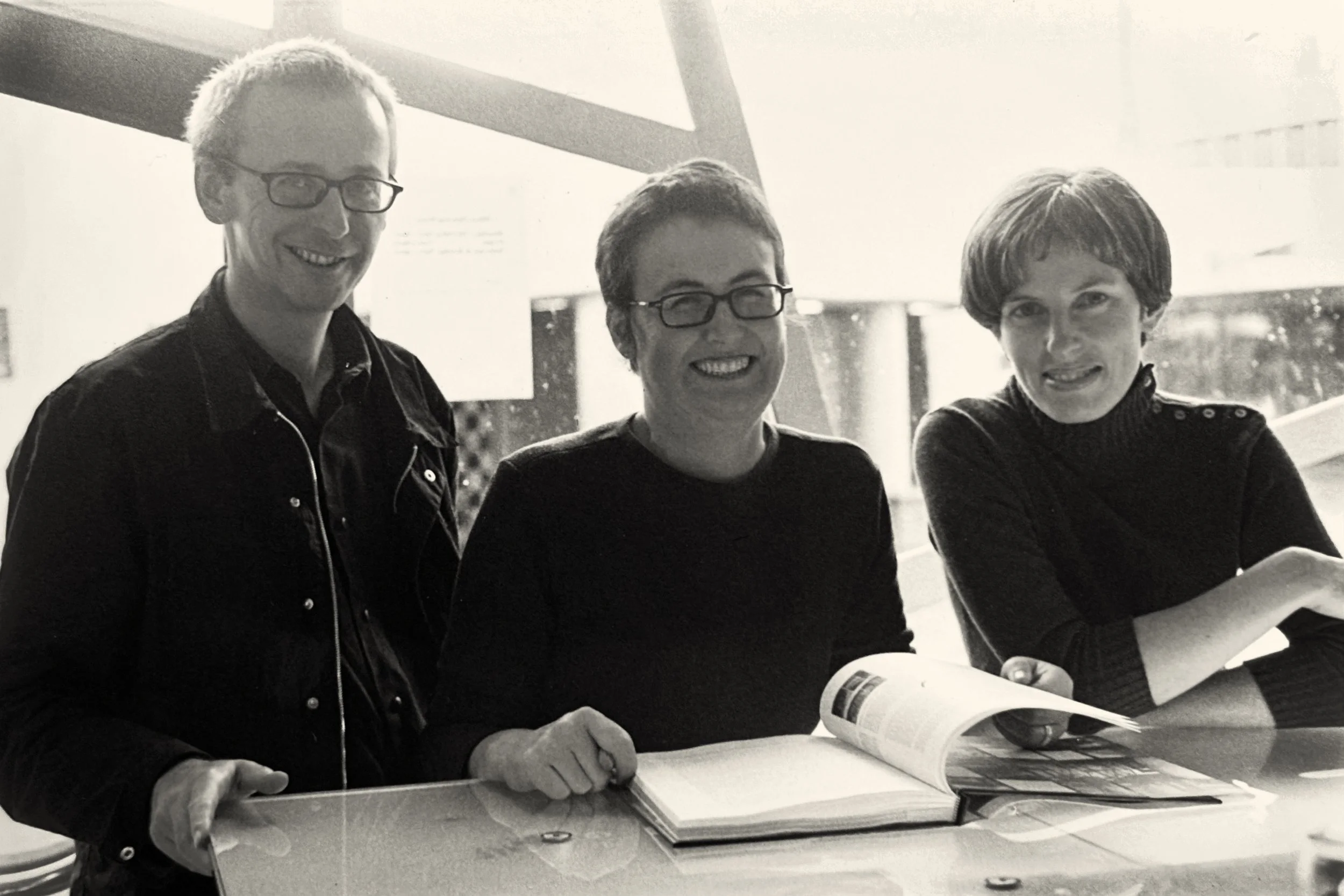
Paul Walker, Justine Clark & Catherine Griffiths, 2000. Photo Bruce Connew.
Then we moved to Australia and I started working at Architecture Media and over time became editor of Architecture Australia. So that's the kind of second bundle. That was also lots of fun. That's how I first got to know Wardle. I did that for around ten years, and in 2011 I left Architecture Media. At that stage I was involved in a large-scale research project led by Naomi Stead (at that time at the University of Queensland) looking into what was happening with women in the profession. As part of that, she said to me, ‘hey, do you want to set up a website?’ And I was like, ‘oh, sure’. And that became Parlour.
JM
Three lumps, I can see the threads.
JC
I've been working on Parlour ever since, and I've always also done other kinds of consulting work. I worked with Wardle on your second book and in various other kind of organizations. I've written quite a lot of guides, but Parlour is now pretty much absorbing most of my time, although I do like to have other projects on the side.
JM
It seems like a busy life, dabbling in many different areas. I see design reviews, jury work as well as writing, editing, advocacy in your profile on Marion’s List. It’s a fascinating approach to the industry and a fairly unique one.
JC
It's very fun. I think I'm restless. I haven't done design reviews for a while, but you know, it's great to have a variety of interests. I think they call it a portfolio career, don't they? I'm interested in all those structures and systems. How they shape things, but I think I'm also just easily distracted!
JM
I can relate. I've been at Wardle for a while but have shifted roles along the way. I heard your name a lot when you were doing the book, the ‘other Justine’ you were known as.
JC
It's always great to meet another Justine, isn't it?
JM
I've always followed your career, and when Parlour launched, it seemed like a great fit, now in retrospect the timing was amazing. I was wondering about how equity became a focus. It was through the ARC grant that you did with Naomi, I imagine, that it branched out.
JC
I was very lucky that I went to architecture school in the late 80s in Auckland. We had an amazing teacher called Sarah Treadwell. She ran courses on women in architecture, but it was also the late ‘80s and feminism was cool. There was a lot of stuff being published through into the ‘90s around feminism and architecture. It was always part of my education. My master's thesis was about architectural drawing, but it was also about gender.
I remember when I was at Architecture Australia, I wrote an editorial called, ‘What happened to feminism?’ There had been this huge amount of effort and work, and then everything went quiet for a long time. When Naomi rang and said, ‘I think we need to work out what's going on with women, they seem to be disappearing’. She put together this amazing team of people who had always been working on these questions. I’m talking about Karen Burns, Julie Willis, Sandra Kadji O’Grady Gill Matthewson did her PhD through that project.
It had just gone quiet and it was fascinating when we launched, we had all these people saying, oh, ‘I thought it was just me’. I think that was the most overwhelming thing – people saying, ‘oh, it's not just me, it's a systemic issue’.

Catherine Griffiths & Justine Clark, Out of Line salon, 2025. Photo: Jordan James Kaye & Steph Irvine.
JM
It’s come a long way in a short time – it seems the industry really needed a mirror held up to it. It’s a cornerstone of many practices, the policies, guides and advocacy and the support that Parlour continues to give and importantly evolves.
JC
I hope so.
JM
What’s your current take on equity in that industry?
JC
Just this morning we published the piece that Jill Mathewson wrote about the entry on Grokipedia about Parlour, which is just very problematic. And I've been having conversations with people in the background about, the turn against equity, it’s really alarming. I'm sort of proceeding a little bit with my hands around my ears. It's worrying at that international level, and how it filters down at a local level.
Just this morning we published the piece that Gill Mathewson wrote about the entry on Grokipedia about Parlour, which is just very problematic. And I've been having conversations with people in the background about the turn against equity, it’s really alarming. I'm sort of proceeding a little bit with my hands around my ears. It's worrying at that international level, and how it filters down at a local level.
I think about the change since we started in 2011 – when everyone was asking us, ‘What are you doing?’ ‘Why are you doing that? Isn't that last century?’ – is remarkable. People are taking it a lot more seriously. There's a lot of interest, in intersectional gender equity, which is important. We hear a lot of stories about people with migrant backgrounds struggling to get into the industry. We've been trying to address these issues more recently. Everyone's got policies now, which is good. The thing is whether the policies are actually put to use and are a living part of the life of the practice or whether they're just something they had to do to get a job.
There’re still some pretty horrible stories and there's still a lot to do. My colleague Ali McFadyen is interviewing a whole lot of women, the same women that Gill interviewed 10 years ago for her thesis. It will illuminate how things have changed, it will be telling. I think there's recognition that it's important and that it's needed. There's a lot of people who are well-intentioned, and they're probably the ones I talk to. Then there's a whole lot of others who probably still have their head in the sand. I worry about those global movements that are coming strongly out of the US, that sort of anti-DEI (diversity, equity, inclusion) as they call it.
JM
Not so existential threat.
JC
I don’t know the impact of that here, yet, but it's worrying.
JM
We must watch out for it. Much of this is informing your take on what's coming up for Parlour. Is that how you program events, talks?
JC
We talk about it quite a lot. We're mindful of it. We've got an event coming up which hasn't been announced yet, someone who will talk to that. We're very mindful of it, but I think we try not to be too reactive. We're trying to do the work that needs to happen. We're trying to present that as a positive, productive thing, that's good for everyone.
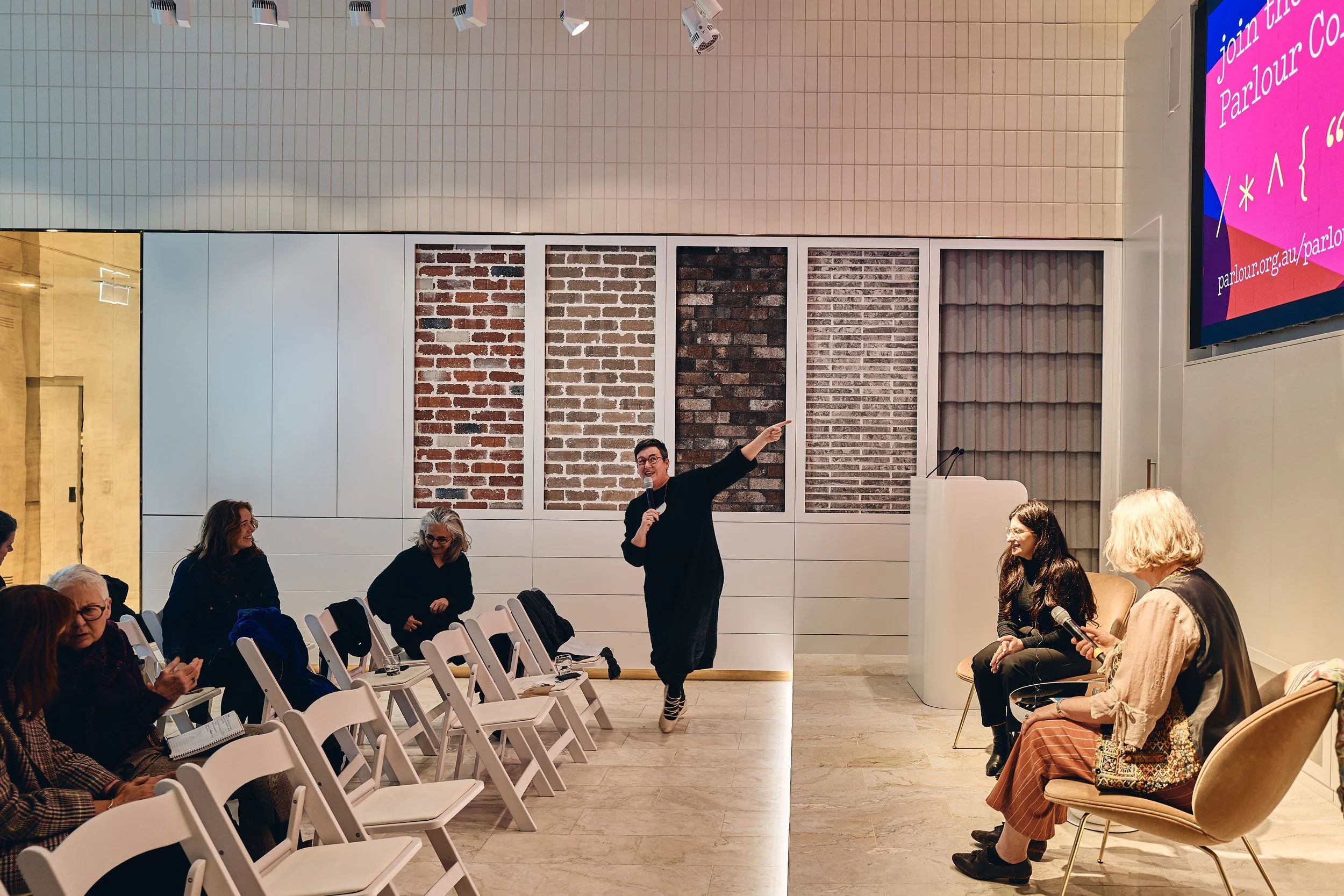
Parlor Salon Winter 2022
I think the other challenge is that in tougher economic times when practises are squeezed, initiatives around equity just seem like a luxury. We would argue that they're not. If you lose ground, then you've lost so much. I know it's hard to run a business and keep everyone employed. The worrying thing you'd really have to keep an eye out for, are trends like if they're making redundancies, for example, what's the demographic mix of that?
JM
What's that reflecting?
JC
Is it reflecting a whole lot of unconscious bias or is it reflecting specific other things? I don't know. I mean, it feels to me like things are looking up a wee bit this year. They seemed to be tough last year, but we'll see.
JM
Is the Parlour platform replicated in other countries?
JC
I don't think there's anything quite like it. There are other things in the same vein, there's this thing in the US called Madame Architect where she interviews a whole lot of people and there are profiles and reviews etc. There's that sort of component on Parlour, but we are also much broader. There are other organisations elsewhere that do similar kinds of things, but I don't think there's anything, with the particular mix of work that we do. The data analysis we do that's led by Gill Matthewson (and would be impossible without Gill) is unique. The combination of data and stories is really important.
We take it seriously. I'm an editor and the people who set up Parlour were academics and critics. My colleague, Susie Ashworth, does an enormous amount on Parlour, is also an editor. We take the quality of the content seriously and we think very carefully about the kinds of things we publish. I think that that is maybe a little bit different than a lot of organizations. That mix of comment, policy, review, personal stories that throw light on bigger issues, and data is a really important part of that.
The whole online event program, which just grew crazily out of COVID is now just fantastic, but it eats up our lives.
JM
I bet it does. I imagine it’s part of its success too. Is Parlour your proudest achievement, professionally? Or is it too soon to know?
JC
I'm quite proud of all of those ‘lumps’ - I think they're all great! I loved being in a team at Architecture Australia. That was a great job. I was very pleased with some of the things I did then. The book that Paul and I wrote, I’m extremely proud of that. My master's thesis, I'm quite pleased with that too! I think I'm quite lucky to have had these different chunks.
JM
All right, Justine, thank you! I appreciate your time and all your energy and effort for the industry. It made a really big difference in the 20 odd years I've been around the periphery of this industry. I've seen the improvement and upgrading of our lives for it. So good on you!
JC
Oh, thank you very much. That's very exciting to hear and lovely to speak to another Justine.
Justine Clark AM, has been a trailblazer for Australian architecture since she arrived here from New Zealand in 1999 Firstly, as a editor during her years at Architecture Media and now widely known for her work cultivating space for women and intersectional practitioners through her leadership at Parlour. Justine’s contribution to the profession has transformed the way practices talk about diversity and equity.
Justine Makin is the Communications Lead at Wardle, working with the marketing team and across the studio to guide engagement with the broader public. She is interested in how the industry can support and nurture minoroties through good communication and raising visibility.